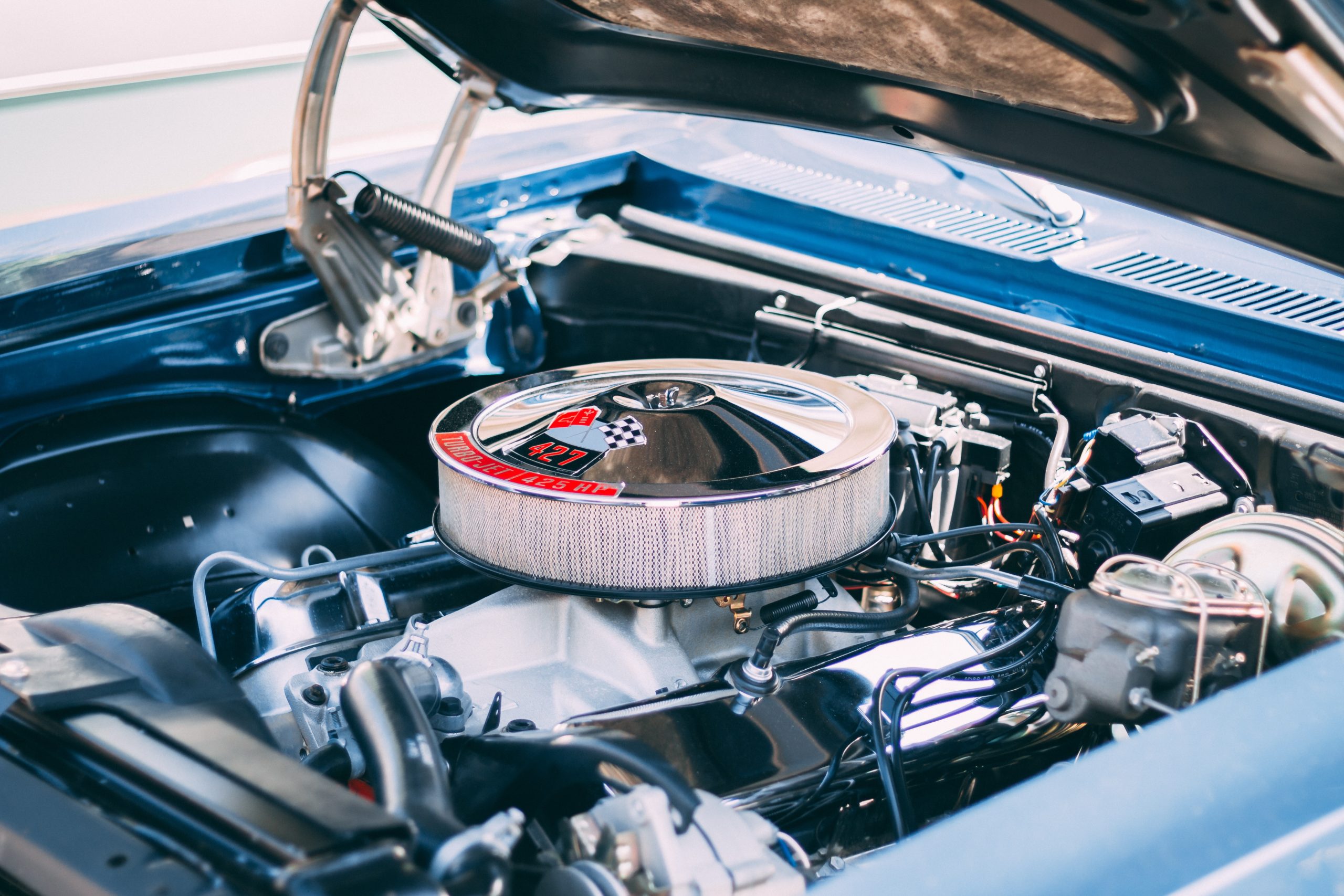
Mustang Radiator Replacement Guide: Every Generation Explained
The Ford Mustang is America's original pony car, and it's been continuously in production since 1964. That means there are nearly six decades of different engines, cooling systems, and radiator designs to keep track of. Whether you're restoring a classic or upgrading a modern Mustang, this guide will help you find the right radiator replacement.
Why Mustangs Need Radiator Upgrades
The Ford Mustang has always been a performance-oriented platform, but factory cooling systems were designed with cost and weight in mind — not maximum performance. Common reasons Mustang owners upgrade their radiators include:
- Engine swaps — dropping a 5.0L Coyote into a '67 fastback? You need more cooling.
- Power adders — superchargers, turbos, and nitrous all generate more heat
- Aging originals — 20-50 year old radiators are often corroded or leaking
- Track use — road racing and drag racing push cooling systems to their limits
- Climate — hot-weather states require more cooling capacity
If you're experiencing any of the warning signs of radiator failure, it's time for a replacement.
Classic Mustangs (1964.5-1973)
The first-generation Mustangs are the most popular for restoration and have the widest range of radiator options.
1964.5-1966 Mustang (First Gen)
- Original engines: 170/200 I6, 260/289 V8, 289 Hi-Po
- Original radiator: Copper/brass, 2-row (V8) or smaller (I6)
- Recommended upgrade: 3-row all-aluminum radiator for 289/302, 4-row for big-block swaps
- Notes: The 289 Hi-Po and Shelby GT350 need more cooling than standard 289s. If you've added a 302 or 351W, a 3-row aluminum radiator is the minimum.
1967-1968 Mustang
- Original engines: 200 I6, 289/302/390/427/428 V8
- Recommended upgrade: 3-row for 289/302, 4-row or dual-pass for 390/428 big-blocks
- Notes: Big-block Mustangs (390, 428 CJ) need serious cooling. A 4-row aluminum radiator with dual electric fans is recommended.
1969-1970 Mustang
- Original engines: 250 I6, 302/351W/351C/390/428/429 V8
- Recommended upgrade: 3-row for 302/351, 4-row for 428/429
- Notes: The Boss 302 and Boss 429 have unique cooling requirements. The 351 Cleveland runs hot and benefits from a 4-row upgrade.
1971-1973 Mustang
- Original engines: 250 I6, 302/351C/351W/429/460 V8
- Recommended upgrade: 3-row for 302/351, 4-row for 429/460
- Notes: These larger, heavier Mustangs need more cooling than earlier models, especially with big-block engines.
Mustang II (1974-1978)
The Mustang II is often overlooked, but it's gaining appreciation as a restoration platform. These cars came with smaller engines (2.3L I4, 2.8L V6, 302 V8) and correspondingly smaller radiators. A 2-row aluminum radiator is sufficient for most applications. The 302 V8 benefits from a 3-row upgrade.
Fox Body Mustang (1979-1993)
The Fox Body is one of the most popular platforms for performance builds, and cooling is a common concern.
1979-1986 (4.2L V8, 5.0L HO, 2.3L Turbo)
- Recommended upgrade: 3-row aluminum radiator for 5.0L, 2-row for 2.3L
- Notes: The 5.0L HO and SVO turbo models run hot. Electric fan conversion is highly recommended.
1987-1993 (5.0L EFI)
- Recommended upgrade: 3-row aluminum radiator with dual electric fans
- Notes: The 5.0L EFI is a popular engine for swaps into older cars. If you're building a Fox Body for performance, a performance radiator with dual-pass design is worth considering.
SN-95 / New Edge Mustang (1994-2004)
- Original engines: 3.8L V6, 4.6L 2V, 4.6L 4V (Cobra), 5.0L (1994-95)
- Recommended upgrade: 3-row for V6, 3-row or 4-row for 4.6L, 4-row for Cobra and supercharged applications
- Notes: The 4.6L 4V Cobra and any supercharged SN-95 need maximum cooling. The factory plastic-tank radiators are prone to cracking at this age — replacement is overdue.
S197 Mustang (2005-2014)
- Original engines: 4.0L V6, 4.6L 3V, 5.0L Coyote (2011+), 5.4L Supercharged (GT500)
- Recommended upgrade: 3-row for V6 and GT, 4-row or dual-pass for GT500
- Notes: The 5.0L Coyote generates significant heat. If you've added a supercharger or turbo kit, a 4-row aluminum radiator is essential. The GT500's factory cooling is marginal for track use.
S550 Mustang (2015-2023)
- Original engines: 2.3L EcoBoost, 5.0L Coyote, 5.2L Voodoo (GT350), 5.2L Predator (GT500)
- Recommended upgrade: 3-row for EcoBoost and GT, 4-row dual-pass for GT350/GT500
- Notes: The S550's factory cooling is better than previous generations, but track-day enthusiasts and forced-induction builds still benefit from upgraded radiators. The GT500's supercharged 5.2L needs maximum cooling capacity.
Mustang Radiator Installation Tips
Installing a radiator in a Mustang is generally straightforward, but there are a few things to watch out for:
- Drain the system completely — Mustang cooling systems hold 12-18 quarts of coolant depending on the model
- Disconnect the battery — always disconnect the negative terminal before working near the fan
- Label all connections — especially trans cooler lines and fan wiring
- Replace the hoses — upper and lower radiator hoses are cheap insurance
- Use new clamps — spring clamps can weaken over time; use new ones
- Bleed the air — Mustangs have specific bleed procedures; follow them to avoid air pockets
- Check fan clearance — especially if switching from mechanical to electric fans
Building a Complete Cooling System
A radiator alone isn't a cooling system. For maximum performance, consider a complete upgrade:
- Radiator — All-aluminum, properly sized
- Fan shroud — Matched to your radiator
- Electric fans — High-CFM, properly sized
- Relay kit — handles the electrical load of electric fans
- Coolant — modern aluminum-compatible formula
- Thermostat — correct temperature rating for your application
Our product pages let you build a complete cooling bundle with a radiator, shroud, fan, and relay kit — with a $25 bundle discount.
Frequently Asked Questions
What radiator fits a 1967 Mustang with a 302?
A 3-row all-aluminum radiator designed for a 1967-1968 Mustang V8 is the ideal fit. Use our vehicle lookup tool and select Ford > Mustang > 1967 to see exact fitment options.
How much does a Mustang radiator replacement cost?
An all-aluminum performance radiator for a Mustang typically costs $250-$550 depending on the generation and core configuration. This is often less than a factory replacement from a dealership, and the aluminum construction comes with a lifetime warranty.
Do I need to upgrade my fan when I upgrade my radiator?
If you're going from a 2-row to a 3-row or 4-row radiator, you may need a stronger fan to pull air through the thicker core. Converting from a mechanical fan to electric fans with a proper shroud is recommended for any performance build.
Can I use a Fox Body 5.0 radiator in a classic Mustang with an engine swap?
It depends on the specific swap. We recommend using a radiator designed for the chassis (the classic Mustang) rather than the engine donor. Use our vehicle lookup tool or contact us for specific recommendations.
Find Your Mustang Radiator
Ready to upgrade your Mustang's cooling? Use our vehicle lookup tool to find the perfect radiator for your year and model, or browse all radiators and cooling products. Have questions about your specific build? Contact us — we've been helping Mustang owners keep their engines cool since 1986.